
Afro-Zouk · Soukous
Gabonese Afro-Zouk singer whose 1990 hit Bané became one of the greatest songs in African music history. He put Gabon on the pan-African musical map almost singlehandedly.
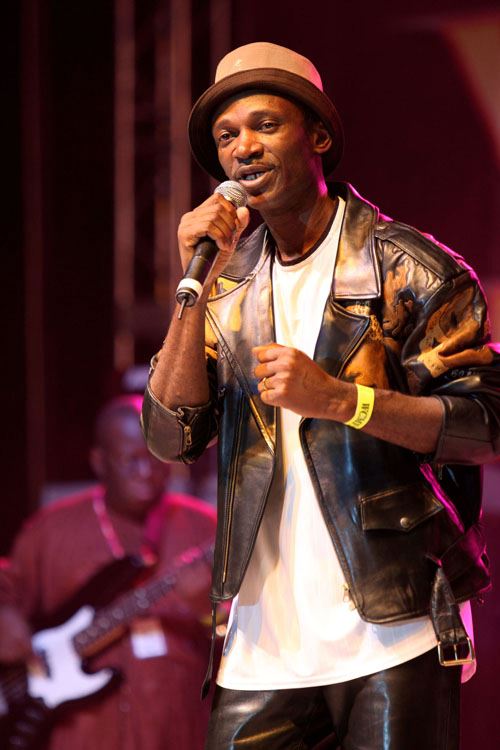
"Since 1990, no other song has measured up to Bané, whether in hit parades or people's hearts."
Oliver N’Goma, “Noli” to those who knew him, was born on 23 March 1959 in Mayumba, a coastal town nestled in the southwest of Gabon. Music was his inheritance from the beginning. His father, a teacher by profession, was celebrated as the finest harmonium player in the region, and at the age of eight, young Oliver received his first lessons on the instrument.
In 1971, the family relocated to Libreville, Gabon’s vibrant capital, where Oliver enrolled at the technical lycée to study accountancy. He quickly joined the school band, Capo Sound, where he taught himself the guitar, honing his craft at formal balls and dances across the city.
Gabon Television recruited him, and in 1988 he was sent to Paris for cameraman training. That long Parisian winter proved to be the turning point of his life. In the city of lights, he refined a collection of musical outlines he had sketched back home,and one evening, he crossed paths with Manu Lima, one of the most respected producer-directors on the Afro-Parisian scene.
The result was Bané, the song and the album. When Radio Africa N°1 and Gilles Obringer on RFI began playing it, something extraordinary happened. The song moved through the continent like a current, becoming one of the biggest-selling albums in the history of African music. Oliver N’Goma was welcomed in the great capitals of Africa like a head of state.
Subsequent albums Adia (produced by Ray Lema), Olympia, and Seva built his legacy. He died of kidney failure in Libreville on 7 June 2010, at the age of 51. His music lives on, still heard on dance floors across Africa, still finding new audiences, his voice anchored permanently in the soul of the continent.
Oliver N'Goma put Gabon on the map of African popular music almost singlehandedly with one album. Bané swept across Africa, France, and the French West Indies, and its influence only deepened with time. His music has since found second lives in the digital age, sampled by international artists and rediscovered by new generations through streaming. His Afro-zouk rhythms remain a touchstone for contemporary African artists blending tradition with modernity.