
Pan-Africanist · Independence Leader · Prime Minister
The first democratically elected Prime Minister of the Congo, Patrice Lumumba led his nation to independence from Belgium and paid for it with his life at the age of 35. He was murdered 67 days after taking office, by a conspiracy involving his own army chief, Belgian operatives, and the CIA. Africa lost its most electrifying voice of liberation before it could hear what he might have built.
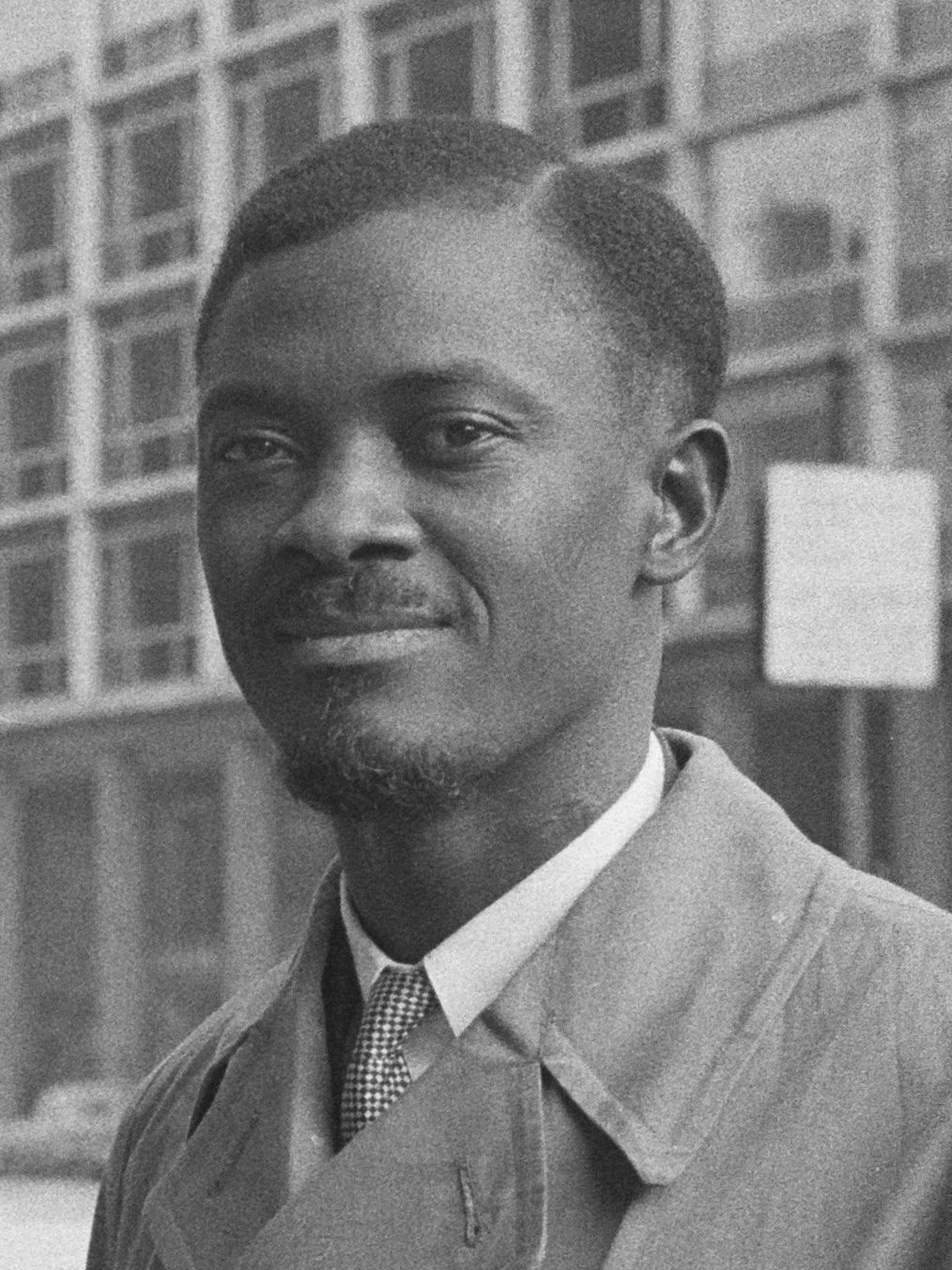
"We are not alone. Africa, Asia, and the free and liberated peoples from every corner of the world will always be found at the side of the Congolese."
Patrice Émery Lumumba was born on 2 July 1925 in Onalua, a small village in the Kasai province of the Belgian Congo, into a society that had been systematically stripped of its dignity for more than three decades. The Congo under Belgian rule was not a colony in the conventional sense, it was a resource extraction operation of extraordinary brutality, where African labour was coerced through violence to produce rubber, copper, and ivory for European markets. Into this world came Patrice Lumumba, the son of a farmer, of the Tetela ethnic group, a young man of restless intelligence who would spend his short life refusing to accept the terms the colonisers had set.
He was educated at missionary schools, as were most ambitious young Congolese of his generation, and showed early promise as a reader and thinker. He found work as a postal clerk in Léopoldville and then in Stanleyville, where he became involved in African social clubs, wrote for local newspapers, and began to build the political consciousness that would define his life. He read voraciously,African American thinkers, French colonial critics, the emerging literature of pan-Africanism, and developed a vision of a Congo that was genuinely free, genuinely unified, and genuinely independent of European economic control. This last point would prove fatal.
In 1958 he founded the Mouvement National Congolais, the MNC, the only genuinely national political party in the Congo at the time. All other political organisations were based on ethnicity or region. Lumumba alone insisted on a Congolese nationalism that transcended tribe, a vision of a united republic that owed nothing to Belgium and everything to the people who had built it with their hands and blood. That same year he attended the All-African Peoples’ Conference in Accra, Ghana, convened by Kwame Nkrumah,and returned to the Congo electrified by the continental dimension of what he was part of.
The independence negotiations of 1960 moved quickly once Belgium concluded that holding the Congo by force was no longer tenable. On 30 June 1960, the Republic of the Congo was formally declared independent. King Baudouin of Belgium delivered a speech praising the genius of Belgian colonialism. Lumumba, who had not been scheduled to speak, rose anyway and delivered one of the most extraordinary political addresses in African history, a calm, devastating catalogue of colonial violence and a declaration of what independence actually meant. The Belgians were furious. The world was watching.
Lumumba became Prime Minister. He was thirty-four years old. He had been in office for less than two months when the crises began. The Congolese army mutinied. The mineral-rich Katanga province, backed by Belgian mining interests, declared secession. Belgian troops, who should have left, remained and intervened directly. Lumumba appealed to the United Nations for military support and was refused. He then appealed to the Soviet Union, a decision that sealed his fate in the eyes of Washington and Brussels, who immediately classified him as a communist threat to be neutralised.
The CIA station chief in Léopoldville cabled Washington requesting authorisation for Lumumba’s assassination. President Eisenhower is reported to have given verbal approval. Belgium ran its own parallel operation. Colonel Joseph Mobutu, the army chief of staff Lumumba had appointed,staged a coup in September 1960. Lumumba was placed under house arrest, then fled, was captured, and transferred to Katanga, the province whose secession he had been fighting. On 17 January 1961, he was beaten, tortured, and shot by a firing squad. He was thirty-five years old. His body was dissolved in acid by Belgian policeman Gerard Soete, who kept a tooth as a trophy. He kept it for decades. Belgium eventually recovered it in 2022.
The full extent of Belgian and American involvement in Lumumba’s murder was not officially acknowledged for decades. Belgium formally apologised for its role in 2002. The United States Senate Intelligence Committee has confirmed CIA involvement. The man who overthrew him, Joseph Mobutu, ruled the Congo for thirty-two years under the name Mobutu Sese Seko, looting the country to the point of ruin while maintaining American support throughout the Cold War.
Patrice Lumumba was in office for sixty-seven days. He had no time to govern, no time to build, no time to show the continent what he believed was possible. What he left behind was a speech, a symbol, and an unanswerable question: what might the Congo, and Africa, have become had he been allowed to live?
Patrice Lumumba is the defining martyr of African independence. His murder, carried out with the complicity of Belgium and the United States within months of Congolese independence, exposed the gap between the rhetoric of decolonisation and its reality, the determination of Western powers to ensure that African independence produced compliant governments, not genuinely sovereign ones. His name became a rallying point for pan-African activists, anti-imperialist movements, and liberation struggles across the continent and the world. The Patrice Lumumba University was founded in Moscow in his honour. Streets, squares, and institutions across Africa bear his name. His speech of 30 June 1960 remains one of the most cited texts of African political thought. The Congo he died for has never achieved the unity and dignity he envisioned — a fact that continues to define his tragedy and his relevance.